Damp Proofing & Mould Removal Services in Barnsley
Everything we do starts the same way — finding out what is actually wrong. Here is what each job involves, in plain English, so you know what you are buying before anyone quotes you for it.
Treating rising and penetrating damp at source — then leaving the wall in a state you can actually decorate.
Rising damp is groundwater climbing through the masonry by capillary action because the damp proof course has failed, been bridged, or was never installed. It is genuinely less common than the industry likes to suggest, but where it is present it will not resolve itself and it will keep destroying plaster and skirtings.
The modern fix is a chemical damp proof course. We drill into the mortar bed at a set spacing, inject a damp proofing cream under pressure, and it spreads through the masonry and cures into a continuous water-repellent barrier. Above that barrier, the salt-contaminated plaster has to come off — leave it on and the hygroscopic salts in it will keep pulling moisture from the air and the wall will look wet forever, whatever you have done underneath.
What the job includes
A survey with moisture readings, inside and out, before anything is quoted
Hacking off contaminated plaster and replastering in a salt-retardant render
Site cleaned down daily and a written record of what was done
Be wary of anyone who quotes for a DPC over the phone. Rising damp is the most over-diagnosed problem in the trade, because it happens to be the most profitable one to treat. If nobody has taken a reading in your house, nobody knows what is wrong with it.
Killing the growth, then removing the reason it grew — because one without the other is a waste of your money.
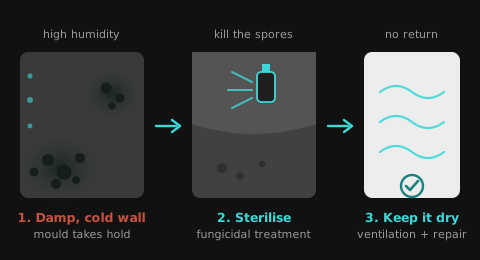
Black mould is not really a damp problem in its own right. It is what grows when a surface stays wet long enough, and in most Barnsley homes that means condensation on a cold wall rather than water coming in from outside. It settles in the places with least air movement: behind wardrobes, in the corners of north-facing rooms, around window reveals, on ceilings above the shower.
Cleaning it off with supermarket spray takes the stain away, and that is all it does. The root structure stays in the surface, the wall stays cold and humid, and it is back before long. We sterilise properly with a fungicidal treatment that kills the growth, replace any plaster that has broken down, and then deal with the moisture — usually with ventilation, sometimes with a repair, sometimes with insulation to lift the surface temperature.
Why it keeps coming back
The spores were never killed, only the visible stain removed
Humidity in the house is still high, with nowhere for it to go
The wall surface is cold enough for moisture to condense on it
Furniture against an external wall stops air moving across it
An actual defect is letting water in and has never been found
Worth knowing: damp and mould in the home are recognised health risks, particularly for children, older people and anyone with asthma or a respiratory condition. If you are a tenant, your landlord has legal duties around this. It is not something to live with while you decide.
The permanent answer to condensation — move the moisture out before it can settle on anything cold.
An average household puts a surprising amount of water into the air every day, just by living: showering, boiling pans, drying washing on radiators, breathing overnight. Older houses leaked enough air to get rid of it without anyone thinking about it. Then we fitted double glazing, sealed the draughts, blocked the chimneys and insulated the loft — and the moisture had nowhere left to go.
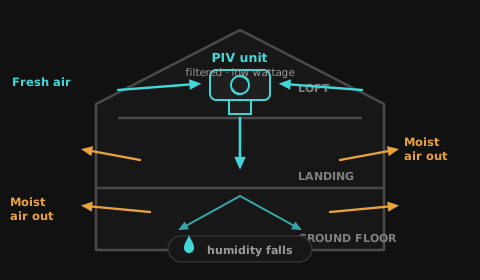
Positive input ventilation is the usual fix. A small unit in the loft draws air in, filters it, and pushes it gently and continuously into the landing. The slight positive pressure that creates displaces the stale, humid air out through trickle vents and background gaps, so the humidity in the house drops and stays down. It runs quietly on very low power and needs almost nothing from you once it is commissioned.
What we install
Loft-mounted PIV units, commissioned to suit the size of the property
Flat-mounted alternatives where there is no accessible loft
Kitchen and bathroom extract fans, including humidity-sensing units
Advice on trickle vents and background ventilation that actually works
Things you can do for free, today
We would rather you tried the simple things first. Put lids on pans. Shut the bathroom door while showering and leave the fan running afterwards. Dry washing outside where you can, and if you must dry it indoors, do it in one room with the window open and the door shut. Pull furniture a couple of inches off external walls so air can move behind it. Keep heating low and steady rather than short blasts — a wall that never warms up is a wall mould likes.
If that isn't enough, it usually means the house physically cannot shift the moisture it produces — and that is a ventilation problem to be engineered, not a lifestyle problem to be lectured about.
How positive input ventilation keeps household humidity down.
Also available
The work that goes with it
Damp rarely arrives on its own. These are the trades that finish the job properly — and we carry them out ourselves rather than subbing them out.
Timber Treatment
Woodworm, wet rot and dry rot in joists, lintels, skirtings and roof timbers. Every timber outbreak has a moisture source behind it, so we find that too — treating the beetle or the fungus while leaving the wall wet just buys you a few years.
Dry rot in particular spreads through masonry and needs dealing with quickly and thoroughly.
Replastering & Plastering
Salt-retardant renders after damp treatment, plasterboarding, refurbishment plastering and skim finishing. This is where damp jobs are won or lost — the wrong plaster specification on a treated wall will show through your decoration within a year.
We also take on general plastering work independent of any damp job.
Insulation Installation
Where a cold internal surface is causing condensation, insulating it raises the surface temperature above the dew point so moisture stops forming there in the first place.
It has to be specified carefully on a solid wall — done badly, insulation moves the condensation somewhere you cannot see it.
Service FAQs
Questions about the work itself
Does a chemical damp proof course actually work?
Yes, when it is installed into a genuine case of rising damp and the wall is replastered correctly afterwards. Modern damp proofing creams are injected into the mortar bed, where they spread and cure to form a continuous water-repellent barrier through the wall.
Where injected DPCs get a bad reputation it is almost always for one of two reasons: they were installed to treat a problem that was never rising damp in the first place, or the salt-contaminated plaster was left on the wall so the damp appeared to come straight back. Both are avoidable with an honest survey and a proper replaster.
Can I just paint over black mould?
No. Anti-mould paint can help as part of a wider fix, but painting over live mould only hides it. The spores and the root structure are still in the surface, and the wall is still cold and damp, so the growth pushes back through the new paint within weeks or months.
The surface has to be sterilised with a fungicidal treatment to kill the growth, and the moisture feeding it has to be dealt with, or it simply returns.
How much electricity does a PIV unit use?
Domestic positive input ventilation units are designed to run continuously on very low power, which is why they are practical to leave on year round. Exact consumption depends on the unit and the speed setting it is commissioned at, so we will confirm the figures for the specific model we recommend for your property rather than quote a general number.
How long before I can decorate new plaster?
New sand and cement render needs roughly a month per 25mm of thickness to dry out, and a skim finish over it needs time as well. Decorating too early traps moisture behind the paint film, which causes blistering and can undo the work.
Use a breathable mist coat when you do start, avoid vinyl and heavy wallpapers on a newly treated wall for the first year, and we will tell you when the wall is genuinely ready.